

.png)
Get in touch with us for inquiries, collaborations, or service requests.
Our team will respond as soon as possible.

News
Disposable vs Reusable Surgical Consumables: Procurement Comparison for Global Buyers
This procurement-focused technical comparison evaluates the operational advantages, cost efficiencies, and safety metrics of disposable surgical consumables against reusable medical devices. It details infection control variables, total cost of ownership (TCO) matrices, hospital processing structures, and OEM private label sourcing parameters for international distributors and healthcare networks. For an advanced review of modern minimally invasive device integrations, see: What Is Minimally Invasive Surgery (MIS)? Devices & Disposable Systems Overview.
Executive Procurement Summary
High-quality disposable surgical consumables are increasingly prioritized by tier-1 hospital systems due to their absolute sterilization certainty, simplified regulatory tracking, the avoidance of hospital reprocessing labor, and scalable OEM packaging programs.
Reusable medical devices generally remain limited to specialized, low-turnover institutional setups supported by heavy Central Sterile Services Department (CSSD) infrastructure, high capital amortization periods, and specific local sustainability-driven waste frameworks.
Understanding Disposable vs Reusable Surgical Consumables
Disposable Surgical Consumables
Technical Standard: Single-use medical devices supplied in pre-sterilized individual peel pouches, ready for immediate operating theater insertion.
Disposable surgical assemblies are universally processed via high-purity Ethylene Oxide (EO) gas sterilization accompanied by full material traceability documentation. They completely strip away institutional reprocessing workloads, remove cleaning chemical variables, and support precise, predictable per-procedure budgeting structures for hospital materials management.
Reusable Medical Devices
Technical Standard: Multi-use instrumentation systems engineered to withstand continuous mechanical decontamination, enzymatic washing, and thermal autoclaving loops.
Reusable instruments depend heavily on rigid, validated sterile processing department workflows, skilled human capital, strict enzymatic chemical controls, and continuous mechanical testing metrics to manage biofilm and protein residue risks.
Reusable hardware generally remains practical within capital-intensive, long-lifecycle asset allocations, or smaller localized clinics executing specialized low-frequency procedures.
Disposable vs Reusable Surgical Consumables: Side-by-Side Comparison
This detailed matrix cross-references the core structural and operational parameters guiding global B2B healthcare tenders:
| Procurement Evaluation Criteria | Disposable (Single-Use Consumables) | Reusable Instrumentation |
|---|---|---|
| Sterility at Delivery | ✅ 100% Pre-sterilized via verified factory batching | ⚠️ Non-sterile; depends on on-site autoclave loops |
| Reprocessing Overhead | ✅ Zero; immediate post-operative disposal | ⚠️ Intensive; multi-stage CSSD labor required |
| Infection Risk Mitigation | ✅ Eliminates cross-contamination and bio-burden risks | ⚠️ Vulnerable to internal channel cleaning flaws |
| Total Cost of Ownership | Highly predictable per-case material cost | Includes capital depreciation, chemical cleaners, utilities, and labor |
| OEM Private Label Sourcing | ✅ Widely scalable across custom branding programs | Highly constrained due to custom molding expenses |
| Global Sourcing Direction | ✅ Aggressive expansion in compliance-sensitive markets | Steady contraction within internal fluid lines |
Procurement Decision Framework
Modern hospital purchasing networks integrate comprehensive screening filters to balance clinical safety metrics alongside administrative inventory stability:
- Infection Control Mandates — Mandatory single-use policies for devices handling high bio-burden fluid channels.
- Sterile Processing Department Capacity — Autoclave turnaround capabilities, water purity standards, and personnel allocation budgets.
- Surgical Throughput Volumes — High-frequency operating rooms prioritize pre-packed setups to lower turnover latency.
- Global Regulatory Validation — Alignment with active CE MDR clearances, ISO 13485, and FDA verification metrics.
- SKU Availability Guarantees — Selecting factory assets with stable polymer lines and uniform component packaging layouts.
- Regulated Waste Parameters — Balancing solid medical waste treatment against the heavy chemical/water use of central cleaning plants.
- Granular Lifecycle Analysis — Factoring in device wear, repair downtime, tracking tracking logs, and unexpected missing-item expenses.
Which Procurement Model Fits Different Healthcare Environments?
| Healthcare Institutional Profile | Recommended Alignment Model | Primary Strategic Driver |
|---|---|---|
| High-Volume Surgical & Laparoscopic Centers | ✅ Disposable Single-Use Systems | Maximizing room turnaround velocity and safeguarding patient fields. |
| Facilities with Limited CSSD Footprints | ✅ Disposable Single-Use Systems | Eliminating capital investment in high-end sterilization plants. |
| Sustainability-Focused Hospital Networks | Mixed / Category-Dependent Mapping | Balancing carbon metrics against high-standard sterilization directives. |
| Established Long-Amortization Capital Programs | Reusable (Selected Heavy Instruments Only) | Amortizing heavy initial machinery acquisitions over multi-year cycles. |
Why Disposable Surgical Consumables Continue to Grow
Infection Control & Regulatory Simplification
Disposable lines completely bypass hospital disinfection validation risks, ensuring pristine physical performance case-by-case and streamlining institutional liability tracking.
Global OEM Supply Chain Scalability
Automated cleanroom conversion channels empower global distributors to scale high-purity medical portfolios with uniform box formats and synchronized validation documentation.
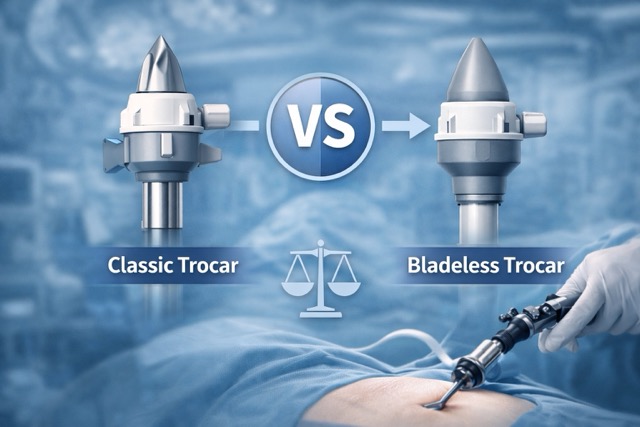
For a detailed analytical breakdown comparing bladeless access tools versus steel cutting blades, see our specialized analysis: Bladeless Trocar vs Classic Trocar — Key Differences & Selection Guide.
Sustainability & Waste Management Considerations
While single-use arrays generate higher absolute volumes of regulated medical biohazard bags, reusable setups consume thousands of gallons of water, intensive chemical enzymes, continuous electrical power, and steam infrastructure over their lifecycle. Hospital material boards increasingly weight both models against localized ecological rules, labor shortfalls, and strict surgical center validation parameters.
Senmed Medical: Disposable Surgical Consumables Manufacturer
Senmed Medical operates as an established contract manufacturer specializing in high-standard disposable operating room solutions, powering comprehensive OEM, ODM, and private label channels for international tier-1 medical distributors.
✔ Active CE MDR & ISO 13485
Rigid production tracks inside a Class 100,000 cleanroom facility with complete lot-to-material dual traceability arrays.
✔ Holistic Operating Room Catalog
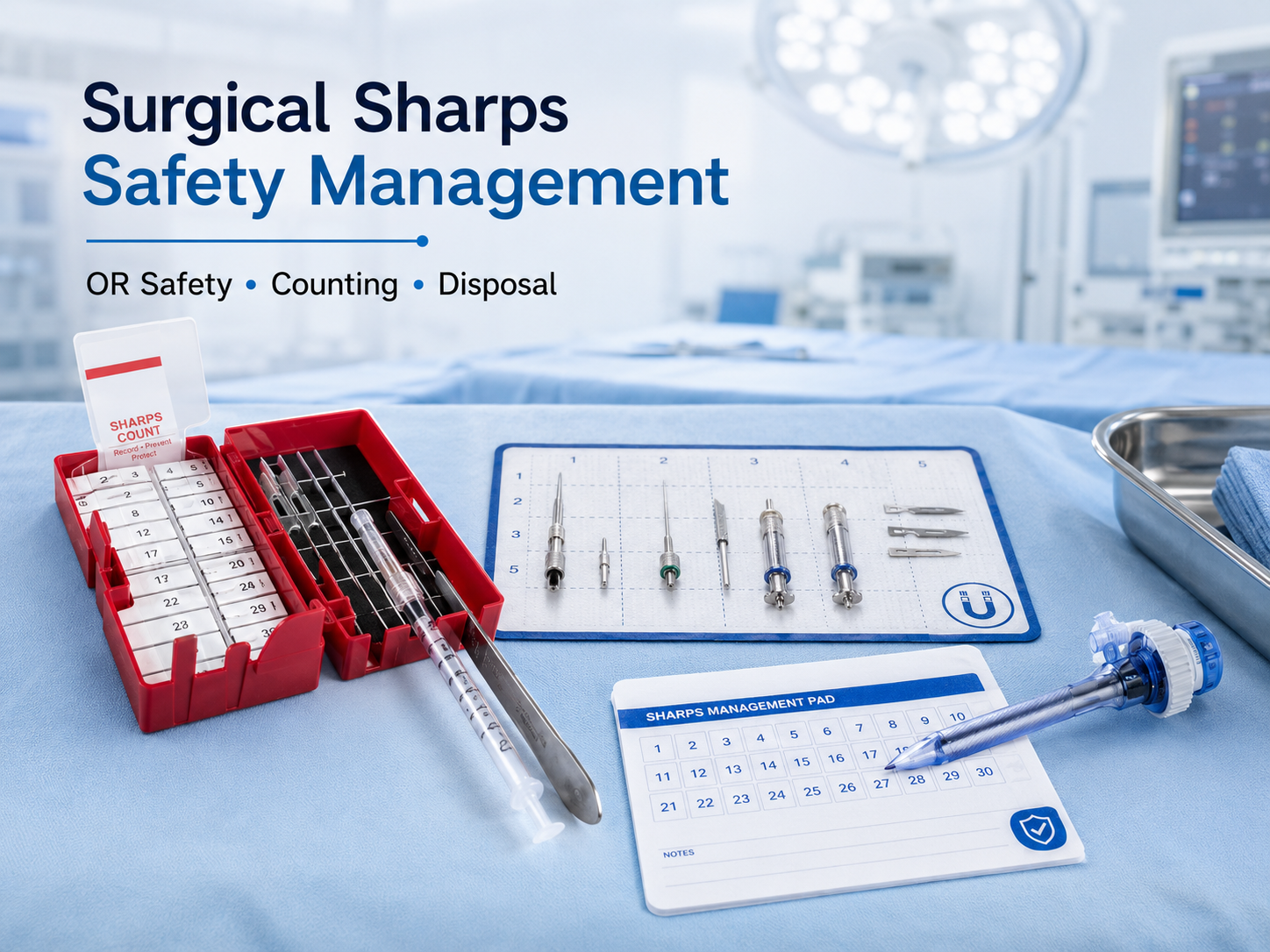
Consolidate your SKU distribution via our high-transparency camera covers, specimen retrieval bags, surgical trocars, and sharps safety blocks.
Frequently Asked Questions About Surgical Consumables
What is the difference between disposable and disposable and reusable surgical consumables?
Disposable consumables are supplied pre-sterilized, used for an individual clinical case, and discarded immediately to optimize infection controls. Reusable surgical instruments are delivered non-sterile and necessitate multi-stage decontamination, human sorting, dynamic testing, and mechanical autoclaving inside hospital sterile processing departments before returning to the active patient field.
Are disposable surgical consumables safer for infection control?
Yes. Single-use surgical devices completely eliminate human processing errors, bio-burden accumulation inside long internal channels, and cross-contamination hazards between consecutive cases, guaranteeing uncompromised physical and microbial barrier metrics every single time.
Are disposable surgical consumables more expensive than reusable devices?
While disposable lines introduce ongoing per-unit procurement costs, they provide fixed, predictable per-procedure accounting metrics. Reusable items involve intensive hidden expenses within their Total Cost of Ownership (TCO), incorporating dedicated machine water treatment, enzyme solutions, technician wages, device replacement downtime, and tracking documentation logs.
Why do hospitals and distributors prefer single-use surgical devices?
Key motivators incorporate standard operating room workflow pacing, lower infection liability risks, error-free automated audits, and predictable contract logistics scaling. For international medical device distributors, single-use configurations are highly efficient to manage via pre-configured SKU portfolios, private label branding lines, and export-ready custom boxes.
What certifications should buyers check for disposable surgical consumables?
To support uncompromised distribution clearances, buyers must verify an active CE MDR profile, comprehensive ISO 13485 quality certifications, industrial gas sterilization logs matching ISO 11135, and active target registration mapping (such as CFDA/NMPA or FDA registrations) corresponding to destination ports.
Can disposable surgical consumables be supplied through OEM or private label programs?
Yes. Single-use access cannulas, specimen bags, and safety consumables are universally acquired through high-volume OEM, ODM, and private label channels. Primary factory evaluation metrics involve design-for-manufacturability (DFM) support, comprehensive SKU footprints, customized box printings, realistic MOQ thresholds, and absolute output chain consistency.
Which is more common today: disposable or reusable surgical consumables?
Disposable, single-use solutions represent the leading standard within modern healthcare procurement setups. Reusable systems remain limited to heavy machinery or specialized segments, whereas primary infection-sensitive consumable lines have heavily transitioned to pre-sterilized disposable frameworks to satisfy institutional risk-management criteria.
Request an Optical Trocar Sample or OEM Consultation
Senmed Medical supports global medical device distributors and private label brands with OEM and ODM optical trocar programs — including product sampling, regulatory documentation, custom packaging, and scalable supply chain solutions.
- CE MDR & ISO 13485 certified production framework.
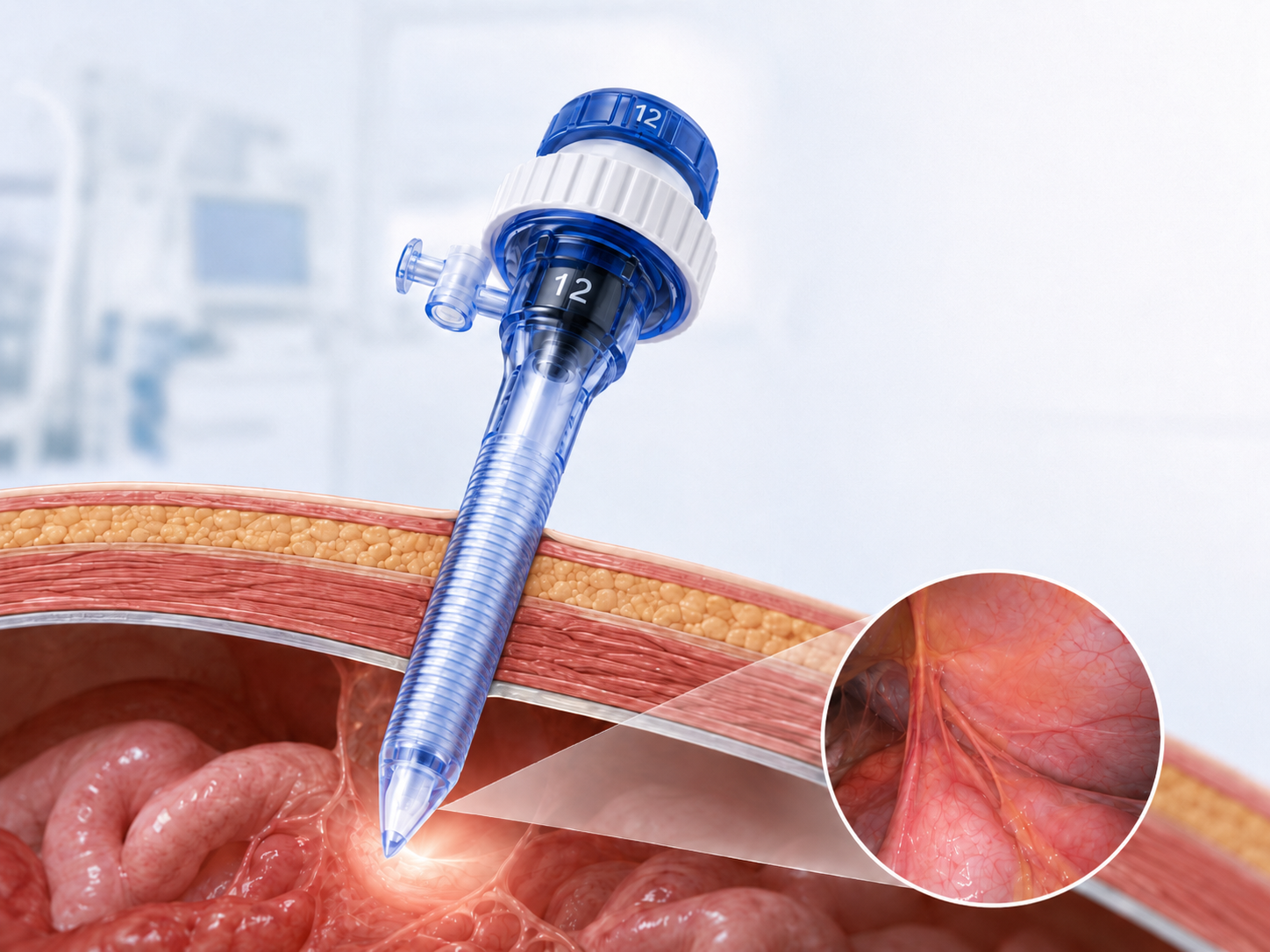
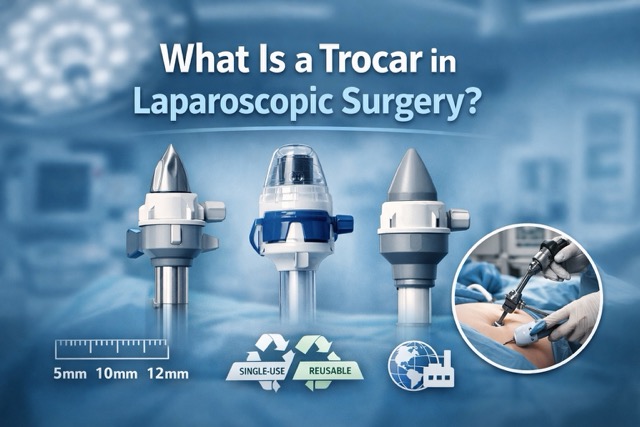
- Classic, Bladeless, and Optical trocar — full entry portfolio from one single supplier.
- OEM / private label programs customized for UK, US, Europe, Australia, and Asia markets.
- Absolute Ethylene Oxide (EO) sterilization backed by ISO 11135 validation.
- Sample requests, DFM mold engineering, and production consultations available.
About Senmed Medical: Senmed Medical is a certified disposable surgical consumables manufacturer specializing in laparoscopic and OR disposable devices, managing robust OEM and private label pipelines for global medical
device distributors. Product lines encompass standard trocar essentials, mass specimen retrieval bags, suction irrigation configurations, smoke evacuation tubing, high-transparency camera covers, basic OR essentials, and sharps safety blocks — all processed
under strict ISO 13485 quality systems and CE MDR clearances inside our 700m² Class 100,000 cleanroom plant.
Learn more about Senmed Medical →